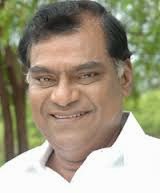
What's with stage experience that ones that have it rave about and ones that don't crave for? Shouldn't acting be acting whether on stage or celluloid? If acting, as they say, is simply reacting, then what difference would it make if it is done in front of a live audience or for a passive one, as in the case of movies? However much an actor would benefit from an instant honest reaction while performing on stage, the real benefit that stage experience bestows a serious actor is understanding and adjusting to the tone of the moment, whether something needs to be dialed-up or down in just a matter of few seconds. And the 'tone' here is a pretty loaded word. It can mean the mood or the voice effect as well as the boundaries of operation for a given situation, even more so when there is no dialogue involved. And it is for this reason that all actors worth their salt flaunt their time on stage as a badge of validity/credibility certifying their ability to quickly adjust to their surroundings. And Kota is right up there with other stalwarts who can stand out in a frame regardless of whether he is at the center of the proceedings or its periphery. Viewers of early 80's telugu transmissions of Doordarshan would remember his efforts in plays both comedic and otherwise as 'ఇల్లలికిన ఈగ', 'హుష్ కాకి' and such, where he, along with Subbaraya Sarma, anchored the proceedings as main stays, earning his spurs as prime talent to watch out for in the coming future. More than the dramatic plays which had the luxury of strong writing and author-backed roles, it is the comedic side that is more challenging to any actor, particularly on stage, where he would be all alone as the sole focus of attention with little more than his talent and timing to come to his aid. And it is here that Kota ranks high above his illustrious predecessors and worthy compatriots with his acute sense of squeezing out humor even out of wry situations that is generally devoid of the usual comedic cues. Consider the following three scenarios that envelope Kota's comedic abilities and the rest in between go without saying.
The man dozing off in a corner is jolted into the present by the news of someone getting married. And off starts the rant with the hook phrase 'Cards Printed' where he contrasts the two marriage styles - arranged and deranged (love) - going on to prove that regardless, marriage is, in the end, a black hole sucking in the life, liberty and pursuit of happiness of every man. In fact, this is a long winded monologue without any explicit punchline. The entire joke is in the setup itself. On paper, the dialogue appears pretty flat without the usual setup-repartee volley. But what makes it work is Kota's splendid delivery mixing sarcasm, bitterness and worldly wisdom, warning the prospective groom from taking the plunge. The year was 1993 when loudness was being passed for comedy and physicality was reigning supreme with kicking one another as the defacto M.O. And in came 'Money' with a whiff of freshness and subtlety that was almost unheard of in telugu cinema, and Kota's 5 minute segment all delivered in broken English walked away with lion share of the honors. This is an actor in perfect sync with the mood the scene - somber, sullen and sunk - not going even an inch above the set tone, delivering what is otherwise the tragedy of two experiences turning sour in such a whirlwind fashion that the audience is caught breathless in overwhelming amazement at the end of the monologue. This is subtlety and smoothness rolled in one. If Dame Judi Dench could win an Oscar for a mere 10 minute role as Queen Elizabeth in 'Shakespeare in Love', then this stellar sequence lasting even lesser duration deserves no less for its impact and impression.
Exhibit No.2 - This is the bread and butter of telugu film comedy - loud, bumbling and near slapstick. Subtlety and nuance have no place here and it is all about announcing the intentions loud and clear. Case in point - 'శ్రీ కనకమాలక్ష్మీ రికార్డింగ్ డాన్స్ ట్రూప్', an ensemble piece with at least 5-6 characters occupying the frame at all times, interrupting and talking over each other constantly in a typical Vamsi fashion. All the tall talk about stage comes in handy here, when Kota had to respond to the cohabitants of the frame matching their rapid fire dialogues with equally loud physicality, all the while making sure that he wasn't going overboard. And Kota does just that. The moment he hands over the dialogue to the next character, the flailing of the limbs, the wild contortions of the face, the near constant movement of frustration and restlessness take over. This is not mere acting. This is choreography, this is ballet, and this is Mime, all rolled in one solid package. The highlight scene when Kota & troupe transform themselves into a legitimate dancing party meant to give pious performances across the temple circuit during the festival season, in order to convince నిర్మలమ్మ to part with her talented grandchild, is an exercise of bravura physical comedy. 'పాహి అని అశోకవనిని శోకించే సీత' played over different tempos, Kota ably molds the performance starting off as a straight legitimate dance master ending up as a raucous road show ring master. This is physical comedy at its best and Kota remains equally at ease with these floor gymnastics.
Lastly, the meaty roles, where the author shines more than the actor, and even then, the ones that actors still love to get their hands on. When 'comedy' and 'writer' are taken in the same breath, the word association automatically ends with one name - Jandhyala. As Sirivennala often lamented, there was no fun in writing for K.Viswanath, as the situations that he created automatically lent themselves for such high creativity and the additional prop and prep that he offered inevitably led to a lyric of stellar quality, with little in the way left for Sirivennala to stretch his aesthetic muscles. The same can be said for most of Jandhalya's works as the words themselves did most of the heavy lifting and all that the actor had to do was merely making sure that he didn't mess up (which again wasn't possible in such tightly controlled unit as Jandhyala's). Even in such cases, Kota refused to relax, this time chipping in with his inimitable intonation - 'సావిత్రమ్మను చూసి మన ఎంటీవోడు గద పిసకతావుండు', his entire portrayal as a committed skinflint in 'అహ నా పెళ్ళంట' and his recurring role as the bumbling police inspector 'తాడి మట్టయ్య' in 'Hello Brother' (this time from the EVV stable) and such. These are strong roles and equally strong portrayals. And for someone who has supreme command over the language, its different dialects, various pronunciations and varied intonations, Kota remains a writer's dream capable and committed enough to take on the complex and the challenging and deliver a result that is equally satisfying to both the creator and the consumer of the content.
Cont'd in next part - Villainy
